History
The history of the magazine began in 2007. FPS was founded by Gafarov brothers, Timur and Farkhad. Timur is a painter and programmer, the author of several games and Open Source projects. Farkhad is a film director and producer, the author and host of a retro games YouTube show.
It all started with a passion for retrogaming. In mid-2007, Farkhad Gafarov came up with the idea of creating a Russian-language e-zine about classic games, emulation, and amateur game development. The name "API" was suggested, and a pilot issue was nearly ready and even announced on the Internet, but it never saw the light of day—the magazine was made in CHM format, and the authors had overlooked some technical nuances. In early 2008, the brothers made another attempt—this time choosing PDF format and focusing on game development. However, the Retro Game section remained and thrived in the magazine for many years.
Back then, the creators of FPS were devoted fans of the Game Maker (and even released several free games under the Clocktower Games brand). Since the Russian GM community didn't yet have its own magazine, they came up with the idea of creating one. At that time, there were virtually no Russian e-zines dedicated specifically to game development. The existing gaming and computer magazines, while occasionally publishing material on the topic, generally didn't focus on it. The situation was quite different abroad: publications aimed primarily at indie developers enjoyed enormous popularity. These included, first and foremost, Game Maker's Data Magazine, GMTech, MarkUp, and other such magazines whose roots lay in the Game Maker user community. All of them, unfortunately, have long ceased to exist, but it was precisely such wonderful PDF magazines as MarkUp that served as models and sources of inspiration when working on the early issues of FPS.
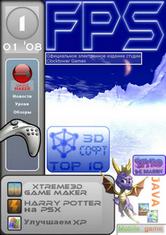
We conceived FPS as a small magazine for Game Maker users, covering primarily 3D game development using the tool. We started literally from scratch: our two-person team had no desktop publishing experience, no proper publishing platform, not even a website or blog or any other specific resource. The first issue, published on February 8, 2008, was laid out in an old Microsoft Publisher and hosted literally on a file-sharing service. But we had enthusiasm and an endless desire to create the highest possible media product, one on par with its Western counterparts. Whether we succeeded is up to the reader to judge, but the widespread response in the Russian-speaking gamedev community, tens of thousands of views on issuu.com, and tons of grateful letters to the editor—does that mean anything?
Back in 2008, we got off to a good start: the issue was warmly received by readers and contributors to the renowned emulation and gaming magazine TOF, which, alas, later ceased to exist. Issue 1 of FPS was announced on the TOF Team forum. The magazine's successful development would hardly have been possible without the GcUp.ru, which, by an interesting coincidence, opened around the same time as FPS. The administration of the site kindly posted the magazine and news of its release on their website, which quickly became one of the largest and most visited gamedev resources on the Russian Internet. Announcements of new issues of the magazine continued to be published on the GcUp.ru news portal for a long time. The site existed until 2026.
Less than a month later, the issue 2 was released. The magazine was planned as a monthly publication, and it was initially, but later, FPS became less frequent. The magazine initially focused not only on game development but also on computer graphics in general. From the very first issues, we began publishing tutorials on graphics editors, particularly PhotoFiltre, which was practically the only free alternative to Photoshop at the time. We also wrote reviews of PlayStation games, games for mobile platforms of the time, and, of course, games made with Game Maker. Particular attention was paid to various GM extensions such as Xtreme3D and Ultimate3D.
On March 30, 2008, Timur Gafarov, editor-in-chief, launched xtreme3d.narod.ru, a website dedicated to Xtreme3D. The magazine was hosted there for a long time; subsequently, the site moved to https://xtreme3d.org. Subsequent issues of the magazine in 2008 contained extensive material on Xtreme3D and other similar engines. Unfortunately, Xtreme3D's author abandoned the project, and due to the lack of the source code, the engine lost its relevance for a long time. Therefore, we decided to expand the scope of our topics and write more about general game development using C++, OpenGL, SDL, and other low-level tools. But in 2016, the community managed to resurrect Xtreme3D from the dead, completely rewriting it from scratch and adding a multitude of new features. Third-party developers joined the project, and now it's a fully usable engine with a new lease of life. We recommended it for anyone nostalgic about the classic Game Maker.
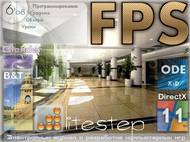
But let's return to 2008. The issue 6, unlike its predecessors, was laid out in a horizontal format and has continued to be published in this format ever since. This decision was made for one simple reason: a horizontal page is easier to read on a horizontal display. The idea itself was borrowed from the BlenderArt magazine. Materials dedicated to the Open Source 3D modeling software Blender gradually formed one of the central focuses of our publication: we were among the first on the Russian Internet to write about Blender 2.5+, featuring relevant news, tutorials, and articles in each issue.
The magazine also remembers difficult times. In 2009, only one issue was published. This was a critical period: at one point, there was even talk of handing over the project to a third party. Numerous letters and positive feedback from readers helped a lot. The crisis passed, and we subsequently settled into a stable rhythm of publishing six issues a year.
There was a period of collaboration with third-parties: in conjunction with the Mobile Kiosk project, Java versions were released for two issues of the magazine (10 and 15). However, this collaboration was short-lived: the era of J2ME came to an end, smartphones and tablets arrived, and mobile apps reborn in a different format; even reading PDFs on mobile devices was no longer a fantasy. However, the FPS mobile app (albeit from different developers) soon appeared for Android and iOS.
When the web finally transformed into Web 2.0, we adopted online document viewing services, Issuu, Google Drive, and DropBox. For a time, the magazine was also distributed via torrents. However, Issuu subsequently tightened its free plan, and we were forced to leave in 2023.
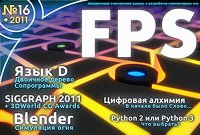
Discussing the Web 2.0, it's impossible not to mention the magazine's former official website (fpsmag.zymichost.com), which launched in October 2010 and lasted for about two years. Due to a policy change of the hosting provider, Zymic, which unexpectedly blocked access to its services for Russia and several other countries due to spam attacks, we decided to operate using only social media. The capabilities offered by free services proved more than sufficient. In the fall of 2012, our new home was a Google+ page (though, unfortunately, Google+ later shut down).
At the same time, the materials of FPS were noted in the Best Article nomination according to the results of 2012 on the GcUp.ru.
In March 2014, the magazine's new blog opened on the Blogger platform.
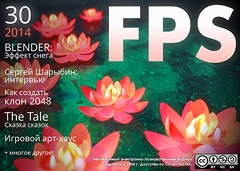
In June 2014, we started a collaboration with the digital publishing house St.Appler, which specialized in publishing for modern smartphones and tablets. This collaboration allowed the magazine to become available as a mobile app for Android and iOS.
In 2014-2015, new writers joined the project. Oleg Bakharev of the LightHouse Software regularly wrote articles on the D language for us. The magazine also acquired its first sponsors.
In November 2015, we launched a subsidiary project, CG World, a website dedicated to modern technologies in computer graphics, animation, and game development. It was conceived as a supplement to FPS: we used it to publish timely news and announcements on our topics. Gradually, CG World developed its own niche, covering topics that the magazine couldn't cover. It operated as a standalone resource for five years, eventually merging with the online version of FPS. The website finally closed in June 2021.
A few words about the programs we used to make FPS with. Issues 1-6 were created in MS Publisher, and issues 7-11 in OpenOffice.org Draw. Afterward, we decided to experiment and began layout using a specialized XML-based markup language, using the ReportLab PDF framework. It worked well, but this method significantly slowed down the production, so starting with issue 20, we switched to LibreOffice. Issue 47 was laid out in Scribus as an experiment, but we were again dissatisfied with the production speed and returned to LibreOffice. Now, the magazine's publishing base is based entirely on free software. We use LibreOffice, GIMP, Inkscape, and Blender.
The magazine continued to be published in its usual format and with a stable frequency until the end of 2017, after which it was suspended, and not a single issue was published for the entirety of 2018. This was not due to a loss of interest on the part of the authors, but rather to a simple lack of time and financial resources to continue such a project on a non-commercial basis. Furthermore, times have changed, and PDF publications have lost their appeal to a wider audience. Therefore, we decided to postpone the next issue until fresh ideas emerge.
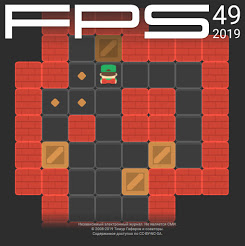
And soon a solution was found: FPS was reborn as a mobile-forst web app. The first issue in HTML format was 49, published in July 2019.
In early 2020, the magazine's website moved for the third time–to fps.xtreme3d.ru. Ironically, 12 years later, FPS is once again hosted on the same server as the Xtreme3D portal. Unfortunately, in 2020, due to difficulties caused by the COVID-19 pandemic, the magazine was not published at all. At the end of 2020, we began developing a CMS for publishing news. We ultimately ditched numbered issues and transitioned entirely to a news portal. At the same time, we began collaborating with the PRonline news agency to publish press releases.
In early 2026, the magazine's website moved to a new server, placing FPS under the jurisdiction of the Netherlands. We plan to develop the magazine as an international English publication, without focusing on a specific readership location. That same year, the magazine's website address changed to https://fps.xtreme3d.org.
Currently, the magazine continues to live as a web media. We publish news on game development, 3D graphics, and Open Source software. We post announcements on our Telegram channel.